
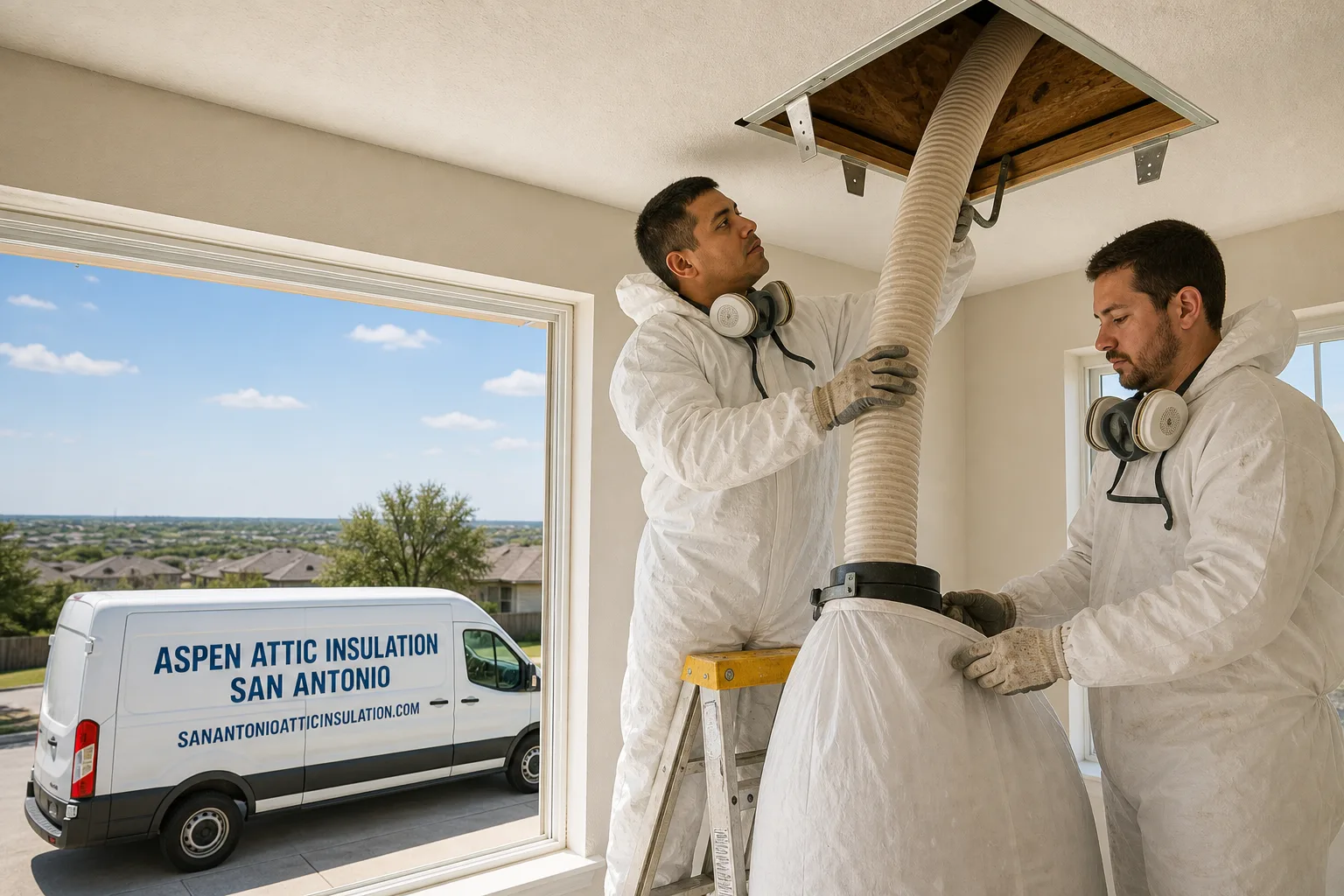
How Much Does Radiant Barrier Installation Cost in San Antonio?
Radiant barrier installation in San Antonio typically costs $1,100 to $3,800 for most homes, with an average project landing around $2,100 to $2,700. You’ll pay roughly $0.70 to $1.50 per square foot for materials and labor combined, depending on whether you choose a single-sided foil or a heavier double-sided product. Most San Antonio homeowners with attics between 1,200 and 2,500 square feet can expect to pay on the lower end of that range for a straightforward staple-up installation, while homes needing full attic floor coverage or a combination of radiant barrier and new insulation will push toward the top.
We’re going to break down exactly what drives that price in San Antonio’s specific market, which includes our brutal summer attic temperatures that routinely hit 140°F to 160°F in July and August. Those numbers matter because they’re the entire reason a radiant barrier pays for itself here faster than in almost any other Texas city.
Key Takeaways: Radiant Barrier Cost in San Antonio
- Total installed cost: $1,100 to $3,800 for a typical single-family home
- Per square foot: $0.70 to $1.50 installed, depending on material and access
- Payback period in San Antonio: 3 to 6 years through reduced cooling costs
- Attic temperature reduction: 20°F to 35°F lower peak summer attic temps
- Typical project timeline: 1 day for most homes
- Best installation method for most San Antonio homes: Staple-up on rafters (roof deck application)
Radiant Barrier Installation Cost Breakdown (2026)
Here’s the line-item pricing you should expect when you get quotes from San Antonio contractors this year. These numbers reflect the local market in 2026, where labor rates for attic work have risen alongside the city’s construction boom, but material costs for radiant barrier foil have remained relatively stable.
| Line Item | Typical Range | Notes |
|---|---|---|
| Single-sided foil radiant barrier (material) | $0.25 – $0.45 per sq ft | Standard perforated foil, works well for staple-up rafter installation |
| Double-sided foil radiant barrier (material) | $0.40 – $0.75 per sq ft | Heavier duty, slightly better performance, more durable during install |
| Labor (attic rafter installation) | $0.45 – $0.75 per sq ft | Higher for low-slope or tight attics; lower for open, walkable attics |
| Labor (attic floor installation) | $0.30 – $0.50 per sq ft | Only recommended if attic floor is unused and no insulation is being disturbed |
| Total installed cost (rafter application) | $0.70 – $1.20 per sq ft | Most common San Antonio approach; includes stapling, taping, and seam overlap |
| Total installed cost (floor application) | $0.55 – $0.95 per sq ft | Less common due to dust accumulation reducing performance over time |
| Attic prep / minor air sealing add-on | $150 – $450 | Sealing top plates, recessed lights, and chase penetrations before barrier install |
| Whole-home package (radiant barrier + attic insulation upgrade) | $3,800 – $7,500 | Combined pricing when we also add or replace blown-in or spray foam insulation |
The single biggest price driver in San Antonio is whether your attic has enough headroom for our crew to work comfortably. In older neighborhoods like Monte Vista, Alamo Heights, and Jefferson, homes built before 1960 often have tighter attics with lower roof pitches. That means more time on knees, more stapling by hand, and a slightly higher labor charge per square foot. Newer construction in areas like Stone Oak, Alamo Ranch, and Cibolo Canyons tends to have taller truss systems that let installers work faster, which keeps labor costs on the lower end.
The second driver is whether your existing insulation needs attention at the same time. We regularly walk into San Antonio attics where the blown-in fiberglass has settled to R-19 or worse, and the homeowner wants both problems solved at once. Adding radiant barrier to an attic that already needs new insulation is smart sequencing, because it means one crew visit, one cleanup, and one written price before we start.
What Affects Radiant Barrier Installation Pricing in San Antonio
- Attic size and roof geometry. A 1,500-square-foot ranch in the North Central area prices differently than a 2,800-square-foot two-story in the Dominion. The roofline area you’re covering is always larger than your floor plan footprint, typically by 15 to 30 percent depending on roof pitch.
- Access and working conditions. San Antonio attics with pull-down stairs and plywood decking are faster to work in than attics with a scuttle hole and exposed joists. If we’re navigating around HVAC equipment, ductwork, and recessed light housings, expect the labor line to reflect that.
- Material type and brand. We install radiant barrier products from manufacturers we trust, including materials sourced through our eight brand partners: Owens Corning, Johns Manville, Knauf, Rockwool, CertainTeed, Icynene, Demilec, and GreenFiber. Double-sided foil costs more up front but holds up better if your attic gets foot traffic from HVAC service visits.
- Installation method. Staple-up on the underside of rafters is the standard in San Antonio and performs best year-round. Laying foil over attic floor insulation is cheaper initially but collects dust, which kills reflectivity within a couple of years. We generally recommend against floor application unless you’re on a very tight budget.
- Seasonal demand. San Antonio’s hottest months, May through September, are when everyone notices their AC running nonstop and calls for radiant barrier quotes. Prices don’t swing wildly, but scheduling tightens. Booking a spring or fall installation can mean more flexibility, though the barrier works the same no matter when it goes in.
- Condition of existing insulation and attic cleanliness. If your attic has rodent damage, old water staining, or insulation that’s been trampled flat, we’ll need to address that before or during the radiant barrier installation. That work adds to the total project cost but prevents you from sealing in a problem you’ll pay more to fix later.
Radiant Barrier Pricing in San Antonio vs. Other Texas Cities
San Antonio sits in the middle of Texas pricing for radiant barrier installation. You’ll pay slightly more than in Houston or Dallas because our attics tend to be smaller and tighter, which slows installation speed per square foot. But you’ll pay less than in Austin, where the construction labor market has pushed attic work rates up significantly over the last three years.
Here’s how the numbers compare based on the quotes we see and the projects we bid against:
- San Antonio: $0.70 to $1.50 per sq ft installed, average project $2,100 to $2,700
- Austin: $1.00 to $1.80 per sq ft installed, average project $2,800 to $3,600
- Houston: $0.65 to $1.40 per sq ft installed, average project $1,900 to $2,500
- Dallas/Fort Worth: $0.70 to $1.45 per sq ft installed, average project $2,000 to $2,600
The San Antonio premium over Houston comes down to attic access. Our older housing stock, especially inside Loop 410, has more scuttle holes and fewer walk-in attic spaces. That means more time on our knees and more care around ductwork, which translates to honest labor pricing.
How Much Can a Radiant Barrier Save on Energy Bills in San Antonio?
In San Antonio’s climate, a properly installed radiant barrier reduces attic temperatures by 20°F to 35°F during summer peak hours. That translates directly into less heat radiating down through your ceiling insulation and into your living space. CPS Energy customers typically see cooling savings of 8% to 15% on summer electric bills, with the biggest reductions in homes that have ductwork running through the attic.
Let’s put a dollar figure on that. A typical 1,800-square-foot San Antonio home with central AC spends roughly $220 to $320 per month on electricity in July, August, and September. A 10% reduction is $22 to $32 per month during those months alone. Over a full cooling season, that’s $150 to $250 in savings. Over five years, you’re looking at $750 to $1,250 back in your pocket, which means the barrier is likely paying for itself within the 3-to-6-year window we mentioned earlier.
Homes in neighborhoods with older duct systems, like Tobin Hill, Government Hill, and parts of the East Side, tend to see savings on the higher end of that range. Your ductwork loses efficiency when it sits in a 150°F attic, and a radiant barrier directly addresses that problem by dropping the attic temperature into the 115°F to 125°F range.
Is Radiant Barrier Worth It in San Antonio’s Climate?
Short answer: yes, and more than in most U.S. cities. San Antonio averages roughly 220 days per year above 80°F. Our attics bake. The Department of Energy recognizes radiant barriers as most effective in hot, sunny climates, and San Antonio fits that profile perfectly. The technology works because it reflects radiant heat rather than slowing conductive heat, which is exactly the problem our dark shingle roofs create in July.
The homes that benefit most in San Antonio are:
- Single-story ranchers with large roof surface area relative to living space
- Homes with HVAC ducts and air handlers in the attic
- Homes with dark-colored shingle or tile roofing
- Homes where the existing ceiling insulation is at or below R-30
- Two-story homes where the upstairs runs 5°F to 10°F warmer than downstairs in summer
If your upstairs bedrooms are uncomfortable every August no matter what you set the thermostat to, a radiant barrier is one of the most cost-effective fixes available. We pair it with attic insulation upgrades frequently, and we’ll give you a straight recommendation on whether the barrier alone solves your problem or whether you need both.
How to Save on Radiant Barrier Installation
You’ve got several levers to pull if you want to bring your radiant barrier project in on the lower end of the ranges above.
Bundle with insulation work. If your attic insulation is older than 15 years or has settled below code, combining radiant barrier installation with a blown-in insulation top-up means one mobilization charge, one cleanup, and often a better per-square-foot rate on the barrier itself. We’ve done hundreds of these combined jobs across San Antonio and it’s the most common way homeowners maximize their dollar.
Get your attic inspected before quoting. The more information we have about your attic’s condition, the tighter our written price will be. If we know the roof pitch, the decking situation, and what we’re working around, we don’t have to pad the estimate for unknowns. Call us at (361) 213-9499 and we’ll schedule a free attic assessment, which includes photos and measurements we use to build your quote.
Choose the right material for your attic’s reality. Not every attic needs double-sided foil. If your attic is clean, dry, and rarely accessed, single-sided perforated foil performs nearly identically for less money. We’ll tell you which one makes sense and why, instead of upselling you into a product you don’t need.
Don’t wait until July. While we honor our written pricing regardless of season, scheduling flexibility is better in the spring and fall. That doesn’t change your price directly, but it means more options for installation dates and less competition for our crew’s calendar.
Ask about the manufacturer partnerships we carry. Because we source from eight major insulation and building product brands including Owens Corning, Johns Manville, Knauf, Rockwool, CertainTeed, Icynene, Demilec, and GreenFiber, we’re not locked into one product line. That lets us match material cost to your budget without compromising on quality.
Radiant Barrier Installation Cost by Attic Size in San Antonio
To make this concrete, here’s what you should expect to pay based on the approximate attic floor area we’re covering with a staple-up rafter installation:
- Small attic (800 to 1,200 sq ft attic): $900 to $1,800 total
- Medium attic (1,200 to 1,800 sq ft attic): $1,400 to $2,700 total
- Large attic (1,800 to 2,500 sq ft attic): $2,200 to $3,800 total
- Extra-large attic (2,500+ sq ft attic): $3,500 to $5,500 total
These are installed prices including material, labor, seam taping, and cleanup. Your specific quote may vary based on the factors we discussed above, particularly roof pitch and attic access. In areas like Terrell Hills, Olmos Park, and Castle Hills, where many homes have complex roof geometries with dormers and valleys, the coverage per square foot of attic floor goes up, and so does the total project price.
How the Installation Process Works (and What It Costs in Time)
Most radiant barrier installations in San Antonio are one-day jobs. A typical 1,800-square-foot home takes our two-person crew between 4 and 7 hours from start to finish. Larger homes or attics with significant obstructions can stretch into a second day, and we’ll tell you that before we schedule.
Here’s what happens on installation day:
- Attic prep and protection. We lay down walking boards as needed, protect any stored items, and verify the work area is safe to access. This takes 30 to 45 minutes.
- Staple-up installation. We fasten the radiant barrier foil to the underside of the roof rafters, leaving a 2 to 3 inch gap at the peak and eaves for ventilation. We overlap seams by 2 to 3 inches and tape them for continuous coverage. This is the bulk of the labor time.
- Cutting and fitting around obstructions. Roof vents, plumbing stacks, electrical boxes, and framing irregularities all require careful cutting and fastening. We don’t cover vents or recessed light housings, and we maintain the manufacturer-required clearance around heat-producing fixtures.
- Final inspection and cleanup. We walk the attic with you if you’d like, show photos of the completed work, and remove all debris. We’ll also verify that no roofing nails were disturbed and that insulation wasn’t compacted.
Safety note: attic work in San Antonio’s summer heat is physically demanding and involves working at height around electrical wiring and framing. We send crews up in the early morning during hot months, and our technicians are trained on heat safety protocols. We don’t recommend DIY radiant barrier installation in our climate, both because of the heat risk and because improper installation, especially around recessed lights and vents, can create fire hazards or moisture problems.
Garrett Sloane on What He Sees in San Antonio Attics
Garrett Sloane, who leads our San Antonio team, has seen thousands of attics in this city over the years, and he’ll tell you the same thing we tell every homeowner: the biggest mistake people make is waiting until their AC fails in August to think about their attic. By then, the attic has been cooking at 150°F for months, and fixing the radiant heat problem becomes an emergency instead of a planned upgrade.
“In San Antonio, we regularly see attics in neighborhoods like Great Northwest, Braun Station, and Oak Hills where the roof deck is reading 150°F at 3 p.m. in July,” Garrett says. “A radiant barrier knocks that down by 25 to 30 degrees within the first day of installation. That’s not marketing, that’s physics. The foil reflects the radiant heat back out through the roof instead of letting it radiate down onto your insulation and ductwork.”
That’s the kind of specific, local knowledge we base our pricing on. We’re not guessing when we quote your project, we’re measuring your specific attic’s conditions and giving you a written number based on what we actually see.
Why Our Radiant Barrier Pricing Is Different
We don’t compete on being the cheapest quote in San Antonio, and we’re upfront about that. We compete on giving you a written price that doesn’t change, sending a technician whose name and photo you know before they arrive, and backing the work with a 365-day written guarantee.
Here’s what that means for your radiant barrier project:
- Written price before work starts. Always. Our quote includes material, labor, cleanup, and any prep work we identified. If we find an issue during installation that requires a change, we stop and get your approval in writing before proceeding. No surprise bills.
- You know who’s coming. Every technician we send to your San Antonio home is background-checked, identity-verified, and arrives in a clean marked uniform with a photo ID badge. We send you their name and photo before the visit. If anyone else shows up claiming to be from our company, the visit is free and we’ll make it right.
- 365-Day Done Right Promise. If your radiant barrier installation fails within one year, we return and fix it at no cost. That covers labor and materials, and it’s in writing on every job. Most companies in San Antonio won’t put that on paper for attic work.
- Live person answers the phone, 24/7. When you call (361) 213-9499 at 7 p.m. on a Sunday or 6 a.m. on a Tuesday, you’ll reach a real person who can schedule your free estimate. No voicemail trees.
We operate to the Threshold Standard, which is the verification and conduct framework established by our parent company, the Threshold Group, founded in 2002. Each location is independently owned and operated, but every Aspen Attic Insulation office in the Threshold family holds to the same technician verification protocols and written pricing commitments.
Radiant Barriers and Your Existing Insulation: What to Know
A common question we hear in San Antonio is whether a radiant barrier replaces the need for attic insulation. It doesn’t. Radiant barriers and insulation do different jobs. Insulation slows conductive and convective heat transfer, which is heat moving through materials and air. A radiant barrier reflects radiant heat, which is heat moving as electromagnetic radiation from your hot roof deck down toward your living space. You need both for a complete attic system.
If your existing attic insulation is in good shape and at the right R-value for our climate zone, which is R-38 to R-60 for San Antonio, then adding a radiant barrier will boost your home’s overall thermal performance at a relatively low cost. If your insulation is compressed, settled, or missing in spots, we’ll recommend addressing that too, and we’ll show you the pricing for both options so you can decide with full information.
We install blown-in insulation, spray foam insulation, and radiant barriers, and we’ll recommend the right combination for your specific attic, not just the product we happen to have on the truck. Our Radiant Barrier Installation in San Antonio page has more detail on the installation methods and the differences between material types if you want to dig deeper before calling.
FAQs – Radiant Barrier Installation Cost
How much does radiant barrier installation cost per square foot in San Antonio?
Radiant barrier installation in San Antonio runs $0.70 to $1.50 per square foot fully installed, including materials, labor, stapling, seam taping, and cleanup. For a typical 1,800-square-foot attic, that works out to $1,400 to $2,700 total. Your exact price depends on roof pitch, attic access, material choice, and whether we’re doing prep work like air sealing at the same time. Call (361) 213-9499 for a free, written estimate based on your attic’s actual measurements.
Is it cheaper to install radiant barrier myself?
The material alone costs $0.25 to $0.75 per square foot, so DIY material costs for a 1,500-square-foot attic would run roughly $375 to $1,125. But we don’t recommend it in San Antonio. Attic heat in our summers creates real health risks, and improper stapling around recessed lights, vents, and wiring creates fire hazards and moisture problems. The labor portion of professional installation, roughly $0.45 to $0.75 per square foot, buys you experience, insurance, and a written guarantee. If you’re weighing DIY against hiring us, call (361) 213-9499 and we’ll give you an honest assessment of what your specific attic requires.
Will a radiant barrier actually lower my electric bill in San Antonio?
Yes, in most San Antonio homes a properly installed radiant barrier reduces summer cooling costs by 8% to 15% annually. That’s $150 to $250 per year in savings for a typical home, which gives you a 3 to 6 year payback period on the $1,100 to $3,800 installation cost. Homes with attic ductwork and darker roofing see the strongest savings. For a precise estimate of your likely savings, we’ll evaluate your attic’s configuration during a free estimate, which you can schedule at (361) 213-9499.
How long does radiant barrier installation take?
Most radiant barrier installations in San Antonio take 4 to 7 hours, completed in a single day. Larger homes, attics with low clearance, or projects that include insulation upgrades can extend to a second day. We’ll tell you the expected timeline before we schedule, and we start early in the morning during summer months to minimize heat exposure for our crew. Call (361) 213-9499 to check our current scheduling availability.
What’s the difference between single-sided and double-sided radiant barrier?
Single-sided foil costs $0.25 to $0.45 per square foot for materials and is the right choice for most staple-up rafter installations in San Antonio attics that are clean and dry. Double-sided foil runs $0.40 to $0.75 per square foot and holds up better in attics with frequent foot traffic or dusty conditions. Both products perform nearly identically when installed correctly on rafters. We’ll recommend one based on your attic’s condition, not on which one costs more. Call (361) 213-9499 and we’ll walk you through the options with real numbers for your home.
Does a radiant barrier qualify for rebates or tax credits in San Antonio?
Radiant barriers do not qualify for federal tax credits under current law as of 2026, but CPS Energy occasionally runs efficiency rebate programs that include attic improvements. We stay current on local utility incentives and will let you know if any apply to your project during your free estimate. Even without rebates, the 8% to 15% cooling savings means most San Antonio homes see full payback within 3 to 6 years. Call (361) 213-9499 to discuss whether your home qualifies for any current CPS Energy programs.
Ready to Get a Written Price for Your San Antonio Home?
If you’ve been reading this far, you already know more about radiant barrier pricing than most homeowners who start this process. The next step is simple: call us at (361) 213-9499 and schedule a free attic assessment. We’ll measure your attic, check your existing insulation, and give you a written price for radiant barrier installation before any work begins.
You’ll know exactly who’s coming to your door, because we’ll send you their name and photo before the visit. You’ll know exactly what the work will cost, because it’s in writing. And if anything isn’t done right, the 365-Day Done Right Promise means we fix it, free, for a full year.
Call (361) 213-9499 today to schedule your free estimate, or read more about our home page to see everything we offer for San Antonio homeowners.
Written by Garrett Sloane, Owner at Aspen Attic Insulation San Antonio, serving San Antonio since 2002.
Pricing reflects the San Antonio market as of 2026. Aspen Attic Insulation San Antonio offers free estimates – call (361) 213-9499.
What Our Customers Say
"Honest assessment. Told me the walls were fine and the attic was the problem. Saved me money."
- Ed M."Removed the old matted insulation and sealed the air leaks around the can lights before putting in new. Utility bill dropped the very next month."
- Larry O."Attic hatch got an insulated cover and weatherstrip too. Small thing, big difference."
- Pam J.